
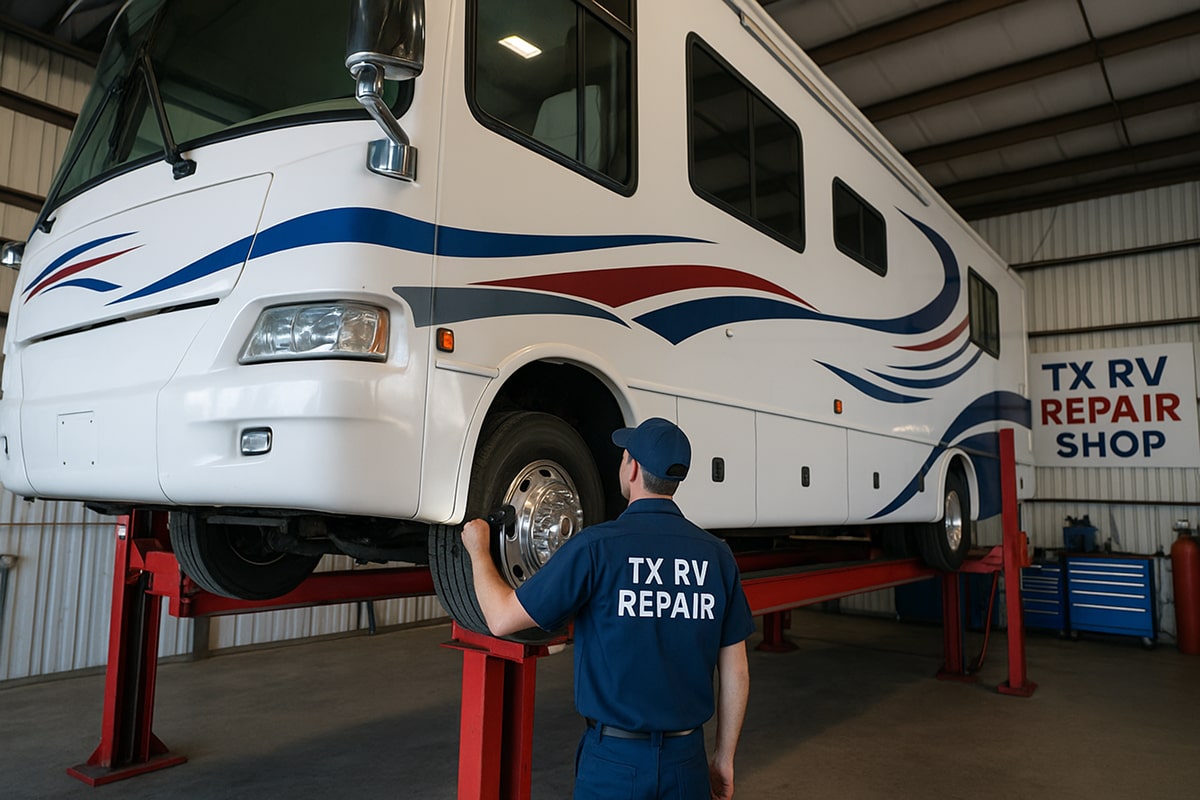
Your motorhome’s suspension system does more than keep the ride smooth—it keeps you safe. If you’ve ever felt your RV sway too much on the highway, bounce over bumps, or pull to one side when braking, your suspension may be trying to tell you something.
In Houston’s mix of heat, humidity, and uneven roads, suspension components wear out faster than many owners expect. At TX RV Repair Shop, we specialize in motorhome suspension repair for all classes of RVs, including Class A diesel pushers, fifth wheels, and travel trailers. This guide explains how to recognize the signs of suspension failure, what causes it, and when to seek professional help before it turns into a safety risk.
Why Suspension Matters for Every RV Owner
Your suspension system supports thousands of pounds of weight while keeping your tires firmly planted on the road. A healthy system absorbs shock, stabilizes turns, and maintains balance through wind, uneven surfaces, and braking.
If your suspension fails, comfort isn’t the only thing you lose—you risk losing control. Poor handling increases stopping distance, reduces traction, and adds stress to your brakes and steering components. The National Highway Traffic Safety Administration notes that worn shocks and uneven tire loading are major contributors to RV rollover incidents, emphasizing how suspension impacts safety (NHTSA tire safety resource).
Common Signs of Suspension Problems
Recognizing suspension symptoms early can prevent more expensive repairs later. Below are the most common RV suspension problems you should never ignore.
1. A Bumpy, Uneven Ride
If your RV bounces excessively after hitting bumps, your shocks or struts are likely worn. These parts control spring movement and prevent your rig from “floating” down the road. Without proper damping, every bump transfers energy through the chassis, eventually damaging other components.
2. Excessive Swaying or Leaning
Crosswinds or passing trucks shouldn’t make your RV feel unstable. If you experience excessive swaying or rolling, the anti-sway bar or shock absorbers may be failing. This may also point to uneven spring tension or worn bushings that reduce overall handling stability.
3. Uneven Tire Wear
If your tires show “cupping” (dips or scallops on the tread), it’s a strong sign of misaligned or damaged suspension parts. Uneven tire wear also occurs in rigs carrying heavy loads without proper balance checks. To better understand related handling issues, see our guide on RV repair diagnosis, which covers alignment, vibration, and steering inspections.
4. Pulling or Wandering
If your RV drifts to one side while driving or braking, you may have spring fatigue, broken shackles, or bent suspension arms. These problems can feel similar to brake issues, so it’s smart to read our article on RV brake problems and warning signs for comparison.
5. Clunking or Squeaking Noises
Metal-on-metal sounds from under your RV usually mean loose or worn bushings, shocks, or mounting brackets. Over time, these noises grow louder as components shift, which can lead to full suspension failure if left unchecked.
Key Components That Keep You Stable
Your suspension system is a combination of several parts that work together to absorb impact and control movement. Here’s what keeps your RV steady and safe:
- Springs – Support vehicle weight and absorb shock. RVs commonly use leaf or coil springs.
- Shocks/Struts – Control spring rebound to prevent bouncing.
- Anti-Sway Bars – Minimize body roll in turns or strong winds.
- Bushings – Cushion joints and reduce metal friction.
- Tie Rods and Control Arms – Maintain wheel alignment during motion.
- Air Ride Systems – Provide adjustable height and comfort, especially in Class A motorhomes.
Each component must work in sync. If one fails, the entire system becomes unbalanced.
How Houston Roads Accelerate Suspension Wear
Houston’s road and climate conditions create the perfect environment for suspension damage. The city’s hot temperatures, humidity, and uneven pavement accelerate wear on metal and rubber components.
Heat causes expansion that weakens seals and bushings, while humidity encourages corrosion. Add heavy braking in traffic and potholes along I-610 and US-59, and you’ve got continuous stress on your suspension. These conditions often lead to premature shock mount fatigue and spring failure—issues that are easy to miss until handling starts to degrade.
DIY Inspection Checklist for RV Suspension
Before scheduling service, you can perform a quick visual and physical check. Here’s how:
- Park on level ground. Look for a corner that sits lower than others.
- Push down on each corner. If it bounces more than once or twice, shocks are worn.
- Inspect tires. Uneven tread means misalignment or worn parts.
- Look for leaks. Fluid near shocks signals failure.
- Check bushings. Cracked or missing rubber means replacement is needed.
- Listen while driving. New rattles or squeaks often trace back to worn joints.
- Note steering response. Wandering or vibration may suggest spring or alignment issues.
If multiple signs appear, your RV needs a professional suspension inspection. Visit our guide on common RV problems to learn about other mechanical warning signs.
Why Suspension Problems Affect More Than Comfort
A failing suspension system impacts much more than ride smoothness. Here’s what’s at stake:
- Longer Braking Distance: Weak shocks prevent tires from staying in full contact with the road, increasing stopping time.
- Unpredictable Steering: Worn parts delay steering response and reduce precision.
- Frame Stress: Unbalanced loads twist the frame and can even crack sealant or plumbing lines.
- Premature Tire and Brake Wear: Uneven load distribution accelerates wear across the system.
The Recreational Vehicle Industry Association (RVIA) recommends annual suspension checks or every 12,000 miles to prevent these issues (RVIA maintenance standards).
When to Repair or Replace Suspension Parts
Knowing whether to replace or repair depends on mileage, condition, and driving style:
- Shocks and struts – Replace every 50,000–70,000 miles or if leaking.
- Springs – Replace if cracked or if your RV sags on level ground.
- Bushings – Replace when cracked or missing; low-cost but high-impact on comfort.
- Air ride components – Inspect yearly for leaks or weak compressors.
When multiple parts show wear, a complete suspension rebuild may be the safest long-term solution. At TX RV Repair Shop, we perform both OEM replacements and upgraded installs using trusted brands like Koni, Roadmaster, and Safe-T-Plus, improving stability without compromising manufacturer specs.
Upgrading Your RV Suspension for Safer Handling
Sometimes repair isn’t enough—especially for Class A motorhomes. Upgrading suspension components can make your RV more stable on highways and during heavy towing. Popular upgrades include:
- Heavy-duty shocks for better damping.
- Reinforced leaf springs to prevent sagging under load.
- Aftermarket stabilizer bars for better cornering.
- Air-assist kits to reduce sway and improve comfort.
These systems can be installed during regular maintenance or after an inspection that shows progressive wear. An upgrade not only enhances comfort but also extends the lifespan of tires and brakes.
The Suspension–Braking Safety Connection
Suspension and braking systems work together to keep your RV safe. When one weakens, the other suffers. For instance, uneven suspension can make brakes grab unpredictably, while weak shocks cause weight transfer during stops.
If your RV pulls when braking or the front end dives excessively, you could have both suspension and brake issues. Visit our detailed post on RV brake warning signs and repair solutions for more insight on how these systems interact.
Why Professional Diagnosis Matters
Visual checks only go so far. Diagnosing Class A suspension issues accurately requires professional tools such as alignment lasers, shock pressure testers, and digital load sensors.
At TX RV Repair Shop, our technicians use this equipment to find the exact cause of uneven handling or tire wear. We also calibrate ride height, torque settings, and component alignment according to each manufacturer’s specifications—something DIY setups can’t guarantee.
Real-World Example: Rebuilding a Class A Suspension
A Houston couple brought in their Fleetwood Bounder after experiencing severe sway and bouncing. They initially suspected tire imbalance, but our inspection found leaking shocks, worn bushings, and a cracked rear leaf spring.
We completed a full rebuild with new Koni shocks, Roadmaster anti-sway bars, and a realignment. The improvement was immediate—better stability, quieter operation, and more even tire wear. This hands-on result shows why expert diagnostics matter before replacing parts at random.
Preventive Maintenance Tips for RV Suspension Health
Preventive care saves money and prevents roadside emergencies. Follow these steps:
- Schedule annual suspension inspections or every 12,000 miles.
- Lubricate bushings and shackles regularly to reduce friction.
- Avoid overloading your RV; always stay within the Gross Vehicle Weight Rating (GVWR).
- Rotate and balance tires every 6,000–8,000 miles.
- Rinse the undercarriage after driving through salt, sand, or mud.
For a broader look at issues beyond suspension, visit our common RV problems resource page for simple troubleshooting guides.
Houston’s Trusted Experts in RV Suspension Repair
Whether you own a compact camper or a luxury motorcoach, your RV’s suspension system plays a critical role in comfort and safety. At TX RV Repair Shop, we offer professional RV suspension repair in Houston backed by years of experience servicing complex systems—including hydraulic leveling and Class A air suspension setups.
Our certified technicians combine diagnostic accuracy with clear communication, helping Houston RV owners stay confident on the road. From small repairs to complete rebuilds, we handle it all—efficiently, honestly, and on schedule.
If you’ve noticed handling problems or uneven tire wear, don’t wait until your next trip to address them. Contact TX RV Repair Shop today to schedule your inspection and get your rig ready for the road ahead.